







1.3kviews
Canada is experiencing a resurgence in non-resident births, often referred to as “birth tourism,” following a sharp decline during the COVID-19 pandemic. A report published Wednesday indicates a rise in deliveries from non-residents in Canadian hospitals.
Non-Resident Births Return to Pre-Pandemic Levels
The Canadian Institute for Health Information uses the term “non-resident self-pay” births. This refers to children born to temporary residents or visitors responsible for covering their hospital expenses. The report indicates these births have returned to pre-pandemic levels in 2024.
The report notes that the number of children born to non-citizens or residents remains small compared to overall births in Canada. The figure has remained under two per cent since 2010.
Politics of Birthright Citizenship
Conservative immigration critic Michelle Rempel Garner previously attempted to amend Bill C-3. The aim was to limit birthright citizenship to children born to at least one parent who is a citizen or permanent resident. Liberal and Bloc Quebecois MPs voted down the amendment.
Birthright citizenship remains intact, and avenues to citizenship have expanded under Bill C-3. “Lost Canadians” now have an easier path to citizenship, regardless of their birthplace or adoption status, provided their parents are citizens who have spent three years in Canada.
The new law allows children born to Canadians abroad to claim citizenship, as can their children. Canadian grandchildren now have access to citizenship if each successive generation spends three years in Canada.
Expert Analysis
Andrew Griffith, the report’s author, stated that non-resident births are returning to pre-pandemic levels. While the data shows a spike in non-resident births between 2021-24, more than doubling from 2,245 to 5,430, Griffiths said he was not alarmed.
“major concern” is a lack of public “trust in government, as well as in immigrants,” which he suggests has been “much weaker over the past few years.”
Griffith noted that the report’s numbers can help “foster open discussion.” The results highlight the value of Canadian citizenship and how far people are willing to go for their children.
Key Statistics
- Non-resident births dropped from 1.6% of total births between 2019-2020 to 0.7% between 2020-22.
- They rebounded to 1.5% between 2023-24 and 2024-25.
- The pandemic years saw a more than 50% drop in non-resident births.
- 2019 recorded nearly 5,700 newborns, while 2020 and 2021 saw around 2,400 and 2,200, respectively.
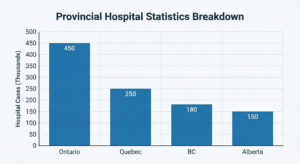
- Ontario leads in non-resident births, generally doubling second-place Quebec each year, both pre- and post-pandemic.
- B.C. and Alberta rank third and fourth, respectively.
Regional Breakdown: Ontario Leads
The recovery is not uniform across the country. A breakdown of hospital cases by province shows a significant disparity, with Ontario reporting the highest numbers. This is likely due to a combination of its large population and the concentration of specialized medical centers within the province, compared to Quebec, British Columbia, and Alberta.
Data Nuances
Griffith notes that about half of international students are covered by provincial health plans.
Why This Matters
The increase in non-resident births highlights the perceived value of Canadian citizenship. For many families, the significant hospital costs, often exceeding $15,000 for a standard delivery, are seen as an investment. This investment aims to secure a stable and democratic future for their child.
add a comment