






1.4kviews
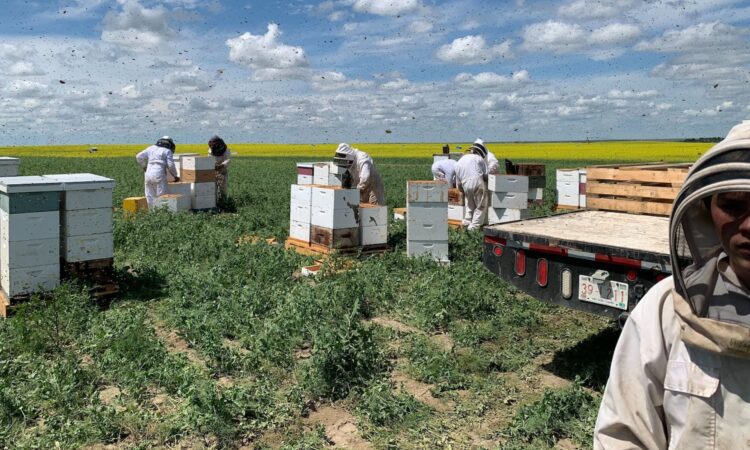
Edmonton, AB – Alberta farmers depend on temporary foreign workers to maintain stable production, according to farm owners. Kevin Nixon, owner of Nixon Honey Farm, says temporary foreign workers have been essential to his business since 1998.
Labor Shortages in Agriculture
Nixon said agriculture jobs often fail to attract a stable Canadian workforce. His family-owned business distributes honey within Alberta and internationally. The farm also provides pollination services.
Nixon Honey Farm produces 1.3 million pounds of honey annually, requiring consistent labor. The work is year-round, demanding, and requires long hours.
Federal Government’s TFW Program Changes
Earlier this fall, Prime Minister Mark Carney announced Ottawa would reduce the number of temporary foreign workers allowed into Canada. The number will drop from 368,000 this year to 230,000 in 2026.
The measure responds to rising unemployment in late 2023. By the end of 2027, temporary foreign workers will account for less than five percent of Canada’s total population.
Impact on Farmers
Canada’s Temporary Foreign Worker (TFW) Program requires employers to demonstrate they couldn’t find a Canadian to fill the job. Employers must complete Labour Market Impact Assessments (LMIA).
Conservative Leader Pierre Poilievre claimed this past summer that temporary foreign workers were taking jobs from young Canadians. However, Employment and Social Development Canada (ESDC) told CTV News Edmonton that they account for one percent of Canada’s overall workforce.
According to ESDC, 36 percent of temporary foreign worker positions approved last year were under the Primary Agriculture stream. ESDC did not specify how many of those positions would be reduced but said primary agriculture and food processing sectors are “generally” exempt from tightening measures.
The Farmer’s Perspective
Nixon said temporary foreign workers are reliable and fill a gap when Canadians cannot do the job. The work is labor-intensive and requires long hours.
“It’s just one of those jobs in agriculture that we can’t seem to attract a stable Canadian workforce,” Nixon said.
Nixon said his farm advertises job postings on Indeed, industry magazines, and websites. He said Canadians hired often don’t stay long or use the job as a stepping stone.
Nixon said he has been accused of accepting government subsidies to hire temporary foreign workers instead of locals.
“I’ve had people say we’re getting cheap foreign labor, and I do not believe that it’s cheap. I do believe it’s reliable and dependable labor,” he said. “These workers are committed; they show up for work everyday.”
Alberta Federation of Agriculture Responds
Upon hearing the federal government would scale back the TFW program, the Alberta Federation of Agriculture (AFA) lobbied the government in Ottawa. They discussed the importance of the TFW program for farmers.
The AFA told CTV Edmonton that Alberta farms and agri-food processors already face labor shortages. These shortages are driven by rural population decline, an aging workforce, and competition from other industries.
“Producers were anxious,” AFA executive director Aaron Stein said of passing on the news of a possible program cut.
The federal government offers two pathways to bring in workers to Canada:
- Seasonal Agricultural Worker Program: Workers stay up to eight months and work in primary agriculture.
- TFW Program: Designed to meet ongoing labor needs on livestock, dairy, and grain farms.
The TFW program includes low-wage and high-wage positions. It allows workers to stay longer and have multi-year stability.
“Foreign workers don’t replace Canadians, they fill roles where no Canadians apply,” the AFA said.
Why This Matters
If Alberta farmers cannot hire temporary foreign workers, it could impact food prices and availability. Farmers may need to charge more for labor, which would increase grocery store prices. A reduction in available workers could also lead to less product and reduced selection at grocery stores.
add a comment