



232views
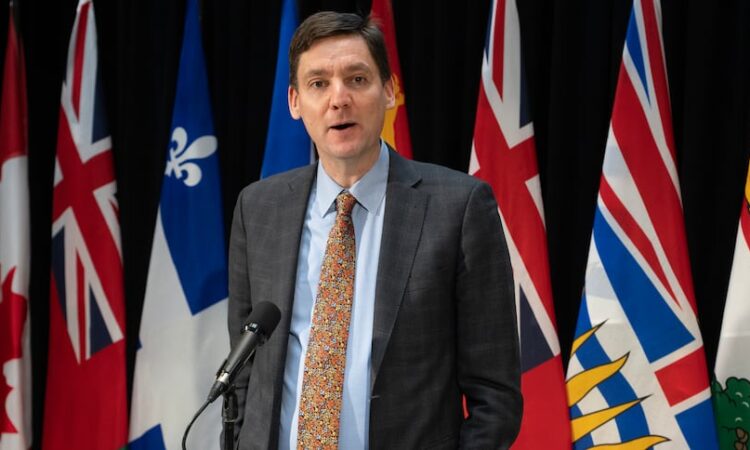
B.C. Premier David Eby on Thursday, Jan. 29, 2026, labeled Alberta separatists’ meetings with U.S. administration officials and their pursuit of financial backing as “treason.” The premier’s strong remarks came ahead of a First Ministers Meeting in Ottawa, where national sovereignty concerns overshadowed discussions.
Eby Condemns US Outreach
Premier Eby reacted to reports that members of U.S. President Donald Trump’s administration met with the Alberta Prosperity Project (APP), a group advocating for Alberta’s independence. The APP reportedly seeks a $500-billion US line of credit from the U.S. Treasury to finance a new country if a referendum succeeds.
“To go to a foreign country and to ask for assistance in breaking up Canada, there’s an old-fashioned word for that, and that word is treason,” Eby stated.
An official with the U.S. State Department confirmed the meetings, noting the department “regularly meets with civil society types” but added that “no commitments were made.” Eby emphasized the inappropriateness of seeking foreign assistance to weaken Canada, especially from a president he described as not particularly respectful of Canadian sovereignty.
Separatist Leader Responds
Jeffrey Rath, co-founder of the Alberta Prosperity Project, dismissed Eby’s comments as “defamatory” and a “childish temper tantrum.” Rath expressed enthusiasm for the attention generated by Eby’s remarks.
“We’re thrilled with Premier Eby losing his little mind today and saying the nasty things he’s saying and all the insults that he’s levying. It’s childish, it’s defamatory, it detracts from his credibility,” Rath told CBC News.
Rath confirmed his personal involvement in meetings in Washington but declined to specify who he met. He cited U.S. Treasury Secretary Scott Bessent’s recent comments as evidence of growing traction for the independence movement.
Premiers React to Sovereignty Debate
Alberta Premier Danielle Smith affirmed her support for “a strong and sovereign Alberta within a united Canada.” Critics, however, noted her actions last year that eased the path for an independence petition. Smith stated she expects the U.S. administration to “confine their discussion about Alberta’s democratic process to Albertans and to Canadians.”
Prime Minister Mark Carney, when asked about the cross-border meetings, stated he expects the U.S. administration to “respect Canadian sovereignty.” Carney confirmed that President Trump has not raised Alberta or Quebec sovereignty in their conversations.
Other premiers also weighed in:
- Manitoba Premier Wab Kinew joked about holding a referendum where choices would be “yeah and heck yeah” to stay in Canada.
- Ontario Premier Doug Ford urged Premier Smith “to stand up and say enough is enough.”
US Officials Weigh In
U.S. Treasury Secretary Scott Bessent, a senior Trump adviser, spoke encouragingly about Alberta’s potential separation on Jan. 23. He described Albertans as “very independent people” with “great resources.”
“Rumour [is] that they may have a referendum on whether they want to stay in Canada or not.… People are talking. People want sovereignty. They want what the U.S. has got,” Bessent told Real America’s Voice.
Republican Rep. Andy Ogles of Tennessee also commented, suggesting Albertans would prefer to be part of the United States.
Alberta Independence Movement Details
Organizers of the Alberta independence movement are actively collecting signatures across the province. They aim to gather nearly 178,000 signatures in the coming months to trigger a referendum.
Despite the vocal campaign, recent public polling suggests limited support for independence. A poll released earlier this month indicated only one-fifth of Alberta respondents would vote to separate.
Quebec Sovereignty Also Looms
The Alberta movement is not the only challenge to Canadian unity. Parti Québécois Leader Paul St-Pierre Plamondon has promised a third referendum on Quebec independence if his party wins the fall provincial election.
Opinion polls generally show about two-thirds of Quebecers would vote against an independent Quebec. St-Pierre Plamondon recently criticized Prime Minister Carney’s speech about the Battle of the Plains of Abraham, asserting Quebec’s survival despite Canada.
CSIS Warns of Foreign Interference
Late last year, Dan Rogers, head of the Canadian Security Intelligence Service (CSIS), stated he is preparing for potential foreign interference in both possible sovereignty referendums. Rogers told CBC’s Power & Politics in November that while CSIS does not interfere with Canadians exercising their opinion, the manipulation of information remains a vulnerability.
“We definitely have to be attentive to the possibility of information operations or interference,” Rogers said.
Why This Matters
The escalating rhetoric surrounding Alberta’s potential separation and the ongoing debate over Quebec’s future underscore significant challenges to Canadian national unity. Premier Eby’s strong condemnation of foreign involvement highlights the sensitivity of sovereignty issues and the potential for external actors to influence domestic political movements. The pursuit of financial backing from a foreign power by a separatist group introduces complex geopolitical and economic considerations, potentially straining international relations. While public polling suggests minority support for separation in both provinces, the political discourse and the prospect of referendums demand careful attention from federal and provincial governments. Furthermore, the warning from CSIS about foreign interference emphasizes the critical need to safeguard democratic processes against external manipulation, ensuring that decisions about Canada’s future remain solely in the hands of its citizens.
add a comment